WELCOME TO THE WONDERFUL WORLD OF BADAGAS!

Baarivi, Nodivi, Oridivi & Odhivi! [Come, See, Listen and Read!] பாரிவி, நோடிவி, ஓதிவி & ஓரிடிவி

Badaga Series Website of Wing Commander Bellie Jayaprakash©2006-2012

Want to listen to some foot tapping Badaga dance numbers as you browse- Sole Gaayi -- MeleKeri -- Kappu Huttileyu -- Hutty Bappanay -

Tuesday, 24 July 2012

Casteless Badagas


Exclusive
 Casteless Badagas  


by   Dr. R.K.Haldorai

Badagas were not under the influence of caste system in any part of their history. In caste system a person’s social status was determined by his occupation. Although caste depended upon a person’s occupation it became hereditary in due course. So, it is inevitable to a person to live with a unalterable particular social status throughout his life.  The traditional association between caste and occupation is far from dissolution. Badagas apparently changed their occupations to suit the environment. They never developed stigma with any particular occupation. It is to be noted that the very name Badaga itself is not derived from any occupation. In India, most of the caste names are derived from occupations. Badagas major occupations were food gathering, hunting, buffalo rearing, millet cultivation (that too swift cultivation for some time) and cash crop cultivation. Among these a particular occupation was predominant at a particular time.  And also all the sub groups of Badaga community engaged the same occupation. Badaga population was very small up to the beginning of the twentieth century and they spread over the entire Nilgiri plateau. In that case, for a long period there were very few families in a hatty (hamlet) and all the families were descended from a same forefather. So, there was a social compulsion to venture occupations in common.  The origin of the caste system in India is shrouded, but it seems, it originated some two thousand years ago. Caste system is associated with religion and people were categorized by their occupations. Badagas’ religious beliefs were primitive in nature, so the religious side of their social organisation was lacking to originate caste system

 jaati (caste) is used in India specifies a subdivision of a larger division varna (a concept based on colour or race). Even though the word jaati is used in Badaga language for mentioning a group of people ,a variety of living beings(e.g.kaadu jaati,animals) the varna concept is entirely unknown to Badagas. In the same way Badagas know about Brahmins, one of the four divisions of varnato some extent. And the rest, kshatria, vaisya and sutra are entirely unknown to them. To uphold caste system the reincarnation belief played a major role. According to that belief after each life a soul reborn into a new material forms. Badagas’ inclination towards ancestor worship is so strong. They do not have belief in the past and future births and do not have any idea about karma theory. One of the religious beliefs of Badagas is that all the dead are there in a particular place near Mallaadu, a western part of the Nilgiris, in astral bodies and the person who is going to die will join with them. This belief is expressed apparently in one of their death ceremonies called ‘battaarsikkoodu’(praying with saamay).In that ritual an elder agnate recites as ‘indu satta anna or tamma or ...bettuno, peeruno, gumbuno, godano elli iddaleyu jaati janava kooda seerali endu battaarsikkiniyo(The dead one may wander around a hill or in a marshland or in a thicket or in a gorge. Wherever he/she is, we pray for his/her safe journey to join with his/her people). The ballads like Koolitippe and Hattytippe narrate this concept elaborately.
It is well known that temples and society of medieval periods enforced the caste regulation rigorously. Badagas did not have any temple to mention. They treated their ancestral houses as temples. They themselves act as priests. Hence the question of enforcement of caste regulation through temples had not arisen in Badaga social environment.


In a peculiar way the Badagas divide the society into two parts viz., Badagas and non-Badagas. The non-Badagas are called holeyas.  holeya is the corrupt form of Tamil pulaiyan. Of course without knowing the connotation of this word these people use it. Edgar Thurston in his famous book, Castes and Tribes of Southern India, gave note on this as ‘Strangers, who are not Badagas are called holeya’.The hereditary lineage with the rigid exogamous sub-groups is the distinctive feature of the Badaga tribal pattern. One of the sub-groups of Badaga community is vegetarian haruvas, who wear sacred thread. Their performance of priest to other sub-groups is not mandatory. In the same way a part of other sub-group adikaris also are vegetarian. The special feature of Badaga social system is that these vegetarians intermarry with non-vegetarian groups and also they inter-dine vegetarian food with non-vegetarian groups. The population of vegetarians among Badagas is so small. The non-vegetarian Badagas eat meat and chicken. Their favourite non-vegetarian food was meat of mega (stag, male of red deer or of other large kind of deer). The non-vegetarian Badagas with their exogamous clans were comparatively the earliest settlers in Nilgiri hills. In due course few other non-vegetarian groups also joined with them and finally vegetarian groups too joined with them.

 The Badagas were originally casteless and lived in the Nilgiri plateau since long back. Even though the group like vegetarian odeyas and non-vegetarian toreyas adopted Badaga language and culture in total, they maintained separate identity by professing not inter-dining and inter-marrying with other Badaga groups.

Badagas lived far away from the villages and towns which were regions of caste-culture. They lived in isolation for a longer period. They did not experience the social status offered due to caste- culture.

Widow re-marriage is not allowed in Varnadoctrine. But it is common among Badagas. Badagas claim no divine origin for their religious beliefs. Their customs are mostly pragmatic and relevant to their day to day life. Their marriage customs also do not reveal any supernatural underpinnings.  Badagas observe pollution and ritual purity in limited ways. Menstruated women stayed away from house for few days and did not go to the oogamane (inner room, kitchen) for few days. Women and non-Badagas eat in idamane (outer room). Badagas did not allow non-Badagas to enter oogamane and to climb on the roof of their houses.

No sub-caste had arisen in Badaga land due to the marriage like anuloma (marriage between man of higher caste and women of lower caste) and prathiloma (marriage between man of lower caste and woman of higher caste) marriages. Of course anuloma andprathiloma are unknown to Badagas. They treat all their exogamous clans in equal status. They perform marriage ceremony without any religious background and they uphold marriage as a contract and not as sacrament. The Badagas cherished and worshipped their respective totem. The inter-marriage among the totemic clans maintained always equal status. They performed their own marriages and religious ceremonies.

 Religious observance played an important role in the development of caste. There were no advance religious ideas developed amongst Badagas. In Varna doctrine Brahmins enjoy highest respect and devote themselves to religious, ritual performances, learning and teaching. The religious activities of the Badagas are very limited. They themselves performed the rituals. With the unlettered mother tongue social environment the question of learning and teaching did not arise. However with these background Badagas maintained a casteless society

Sunday, 22 July 2012

Slow Dance

This is a poem supposed to have been written by a teenager with cancer. She wants to see how many people get her poem. This poem was written by a terminally ill young girl in a New York Hospital........ This young girl has 6 months left to live, and as her dying wish, she wanted to send a letter telling everyone to live their life to the fullest, since she never will. She’ll never make it to prom, graduate from high school,or get married and have a family of her own.......

Note : From the net it is seen that this poem's original author is David L Weatherford


SLOW DANCE


Have you ever watched kids On a merry-go-round?
Or listened to the rain  slapping on the ground?
Ever followed a butterfly’s erratic flight?
Or gazed at the sun into the fading night?

You better slow down. Don’t dance so fast.
Time is short. The music won’t last.

Do you run through each day  On the fly?
When you ask How are you?  Do you hear the reply?
When the day is done  Do you lie in your bed
With the next hundred chores, Running through your head?

You’d better slow down.  Don’t dance so fast.
Time is short.  The music won’t last.

Ever told your child,  We’ll do it tomorrow?
And in your haste,  Not see his sorrow?
Ever lost touch,  Let a good friendship die
Cause you never had time,  To call and say,’Hi’

You’d better slow down.Don’t dance so fast.
Time is short. The music won’t last..

When you run so fast to get somewhere
You miss half the fun of getting there.
When you worry and hurry through your day,
It is like an unopened gift. Thrown away.

Life is not a race. Do take it slower
Hear the music.  Before the song is over.
——————


Badaga connection

A lot of Badagas have died due to the curse of cancer - including breast cancer. Many of them could have been saved had it been treated in the initial stages. Take care of your dear and near ones - Wg Cdr JP

Friday, 20 July 2012

CULTURAL HERITAGE


CULTURAL HERITAGE
by  Dr.R.K.Haldorai [exclusive article]

The innate philosophy of the life of ‘naaku betta’ (the people who live in the hilly region, Badagas) can best be understood from the tradition bound age old hatties (hamlets). The hatty (hamlet,village) is a group of persons as well as an aggregate of land holdings. The village life is highly characterized by various rites and rituals. The village life of Badagas had attracted the serious attention of the scholars even during the colonial administration of the British. Few indigenous scholars' contribution in this regard is remarkable. The result of these studies have got significant role in reconstructing society’s lost glory and reviving cultural heritage.

The Badagas are an ethnic and linguistic minority tribal group with a distinct culture and heritage of their own. The socio-cultural life of Badaga village is largely influenced by customs and traditions with profound antiquated background. This can be explored and analysed through holistic approach of the regional condition based on certain universal thoughts and ideas as well as unified activities.
The history of a society is largely the history of the thoughts and deeds of masterminds. These men of mighty will, vision and wisdom impart new hopes, new life and new direction to a society. In fact the ancestor of Badagas imparted humanism and compassion to their society that was enmeshed in a complexity of rituals. For example, one can note how a salutation passes between two when they meet each other. The younger stands in front of the elder inclines his head slightly and says bandiya, ayya, mamma etc., (grandfather, uncle etc., you have come). The elder replies ‘badak, badak’ (blessing, blessing) and rests his right or both of his hands on the top of the younger. Though the word ‘badak’ usually means ‘live’ here it is used in the sense ‘flourish, prosper or live long’. Uttering these words the elder reveals his felicitation to younger without any prejudice. Whereas the younger shows his profound reverence to the elder. The elders took up with joy the task of shaping the future generation and discharged their duties in an exemplary manner. The elders of the village settled disputed arising among the village folk who were well acquainted with the norms. Justice was meted out at the very place where the dispute took place. It was inexpensive and immediate.

Forefathers of Badagas set up a social atmosphere where the children grew up as good citizens and patriots to live for their society and not for themselves. The village ‘manda’(council) played an important role in shaping the society with moral standards. It was headed by a headman called ‘gowda’. Each village had its headman, who was assisted by few elders and decided public matters such as disputes, differences etc., The village ‘manda’ was there as not mere council for deliberation, but acted as a strong organ of executive work. There were three levels of headman ships viz.gottugaara (headman of an hatty,hamlet),gaundike (headman of an uur, a larger area, mostly consists of few or more hatties ), gowda (headman of a siime). These hierarchic levels show how the system was vogue vigorously and systematically

One of the Badaga proverbs embodies, if you prefer a complaint to a magistrate, it is as if you had put poison into your adversary’s food. The unique karu harasuvadu (after-death confession) of the Badagas mentions that preferring a complaint to the government was considered as a crime, for which atonement must be made. That is, the society acted in such a manner to settle all the disputes, differences etc., with in its social set up. The fact is that the proponents of ‘gowndike’(village leadership) were genuinely committed group who worked hard to inculcate a sense of oneness amongst various sections of the society. They endeavoured to make the people that they are all inheritors of the sublime values of their culture. In short one can say that they had endeavoured to make life richer than what they had found it was.

It is obvious that the primary function of the ‘manda’ is to keep domestic peace, but it is rarely mentioned or considered. To decide impartially and authoritatively ‘manda’ existed in Badaga society. If this agency was not there, persons offended by some crime would have taken the law into their own hands and proceeded to punish according to their uncontrolled discretion. This self-help, quickly degenerating into physical violence and result would total anarchy. Then all, social order would have been destroyed. In this most basic sense,’ manda’ constituted an essential element in society’s machinery for keeping peace. The stupendous effort of this institution is, achieving a total integrated approach of service to society in the fields of cultural awareness in spreading the messages of moral standards and in maintaining intimate relation among the masses. If the function of ‘manda’ was not sincere then the community could have not survived,

Badaga community began to adopt modern systems and culture in consonance with the modern trend. The earlier tradition, moral values and religious practices are seeing their change or end. The call for creating new society and for cherishing new ideas became popular. In the new social order, the present generation is expected to have a vision of the emerging society and its demands and play a major role in the review and reorientation of the society’s cultural heritage and priorities.
Dr.Haldorai also comments on IDENTIFICATION OF BADAGA
According to modern linguistics a language does not descend from another one. Linguistics elucidates the theory of Proto language. In this background it is wrong to say Badaga descended from Kannada. Instead we can say both Kannada and Badaga descended from Proto Kannada-Badaga. Badaga, as a Tribal language of the Dravidian family preserved more of its archaic features. At the same time its long duration of isolation gave room to more innovations.

Script is nothing to do with the position of a language. It is entirely a prerogative of the speakers of the language concern. However with the usage of ‘oole’(palmyra leaf, mentioning written document in ‘oola kattuva’‘ ritual) one can adduce the literary knowledge of ancient Badagas. Once Badaga married women were adorning ‘oole muukkutti’, which had written identification of their husbands. Similarly married men had written identification of their wives of ‘oole’ in their possession. On death of a spouse the other had to return that written identification. After that ceremony the living is free enough to have new spouse.

Earlier scholars expressed their views superficially on Badaga language with their little collected materials. Due to this, once Badaga was relegated to the position of dialect of Kannada. However, during the recent past scholars studied Badaga language thoroughly and exposed its independent status. The Nilgiri gazette mentions about the Badaga language’s far away position from Kannada. Dr.S.Swaminathan,a Dravidian scholar, mentioned Badaga language’s independent status in his paper presented at All India Conference of Dravidian Linguistics(1971). The Kannada encyclopaedia mentions about Badaga’s distinct language status. Dr.R.Balakrishnan, Annamalai University professor gave detail explanation to consider Badaga, Kodagu and Tamil in one group. Dr. Paul Hockings, an American scholar found six dialects in Badaga. It shows the vast usage of Badaga language. Of course these findings are known due to the prolong research and further research is required to have more such details.

I would like to emphasis Badaga language’s independent status with following lines. “In fact that the present day Badaga verbal paradigms do not have any direct parallel with any other language is an important to confirm its status as an independent language”(Pilot Raichoor 1997:197)


Tuesday, 17 July 2012

Badaga Food Habits

Try


Badagas usually grow vegetables in their small patch(es) of land called ‘HOLA’ (see photo) for their regular use apart from other commercial crops like potato, cabbage, carrot and cauliflower etc. These would also include many varities of beans, peas, greens, corn etc. Every variety of avere(bean) has a specific (sometimes unique) badaga name. No Badaga wedding meal is complete without ‘Avare & Gaasu udakka’ [beans & potato curry]. Incidentally, Badagas do not serve non-vegetarian (meat) dishes on the wedding day , main meal is called - ‘maduve hittu‘. Another great trait among these simple peasant people is called ‘nattu‘ - a sort of gift (again mainly the home grown vegetables & grains) given to relatives, friends and guests.

Tea
Tea Leaves… the crop on which Badaga ‘economy’ depends so much..


The agricultural produce, food, dishes, eating habits and some interesting recipes of Badagas.
Apart from badaga.org, I am thankful to N.Bellie, R.Ramachandran (Kekkatty) and others for their imputs. A lot of info is from Prof.Paul Hockings’s books.
I have tried to discuss and describe, not only of authentic recipes on Badaga dishes but also on their agricultural produce, known in Badaga language as BAE - like for example Badagas used to grow wheat, barley, millet - GHODUME, GANJE, ERAGI, BATHA -etc but have almost completely stopped now. 
The food, eating habits, preparations of some dishes as well as the ingredients used are covered. along with the methods used in cooking (like in a mud pot known as MADAKE in traditional fire place - OLE)


It must be mentioned that though many masala powders are available in the market, the Badagas use a specially prepared curry powder known as ‘ BADAGARU MAASU HUDI’ in their preparations.

I remember my childhood days when the dried GANJE / GHODUME (barley/wheat) used to be spread in the fore court of the houses called KERI (street) , between two groups of Hatti HEMMAKKA (ladies) squatted opposite to each other with GANJE DHADIS (sticks of about four feet long and an inch thick) systematically & alternatively beating to remove the chaff. The rhythmic ‘tak tak’ noise would be accompanied by some folk lore Badaga songs. This is known as GANJE SACHODHU.
How can anyone forget the GANJE that would be HURUTHU - fied (fried) in a HURI MADDAKKE (mud pot with a hole on its side) through which a HURI KOL (a short stick with cloth tied at one end as a ball) would be inserted and the contents stirred constantly for uniform frying?

Huri Maddakke


The fried ganje called GANJIKKE would be taken with BELLA (jaggery) and THENKE (coconut). The taste of this would increase if hurutha keerai is added. Used to be a very common snack during the “kodai” season when no one can venture out on account of severe wind and rain.
This ganjikke would be powdered in a ‘ BEESA GALLU ‘ or ‘BEESARAN KALLU’ ( grinding stone ‘flour mill’) that was a permanent feature in the EDHA or NADU MANE and stored for furture use. People who go on long journeys (in olden days travel was by foot only) took this powder along with them, a very handy and healthy meal. This powder would be mixed with hot water to make a gruel. Salt and jaggery could be added to taste.

 [Reproduced. Read more ]

Thursday, 12 July 2012

Gone but not forgotten


You were everything for us for all those glorious 99 years and 8 months.

When we were preparing to celebrate the 'century', you chose to leave this earth just a couple of months earlier but to bless us all from the heaven far above.

Elle idhale'yu engava kumbidichu
[Bless us all from where ever you are]

First Death Anniversary (13-7-2012)

Idyammal Bellie Gowder
BornSeptember 05, 1912
Hubbathalai, The Nilgiris
DiedJuly 13, 2011 (aged 99)
ParentsRao Bahadue HJ Bellie Gowder and Nanji Hethe
Sister ofRao Bahadur HB Ari Gowder
SpouseB.K.Bellie Gowder [Bearhatti]

MOM 5.jpg

[Autographed pencil sketch of Mom by JP in 1964 while she was reading Femina ]

"I know my mother looks much older than what she is .....but those wrinkles [on her hands] have the charm of their own for they are the signsof her great endurance and hard life she has to lead ...... to bring her children to live - respected and regarded by others" - JP 24-1-68

Dear Hands
[Grace Noll Crowell]

My mother's hands were beautiful,
They are not always smooth and white
They were so busy making dull
And lusterless things clean and bright.
They reached so often to caress
A hurt child crying in the night
They moved as quick as fluttering birds
Among the cups and spoons at tea
They did a thousand lovely things
And did them all so graciously
There is no way to sum them up
The countless things she did for us.


[photo of  Idy Hethe's hand by her grandson Abhi Ari -2010]

 A tribute to my mother

 Your gentle guidance has immeasurably influenced all that I have done,
 all that I do,
 and all that I will ever do.

Your sweet spirit is indelibly imprinted on all that I have been,
all that I am,
and all that I will ever be.

Thus, you are a part of all that I accomplish
and all that I become.
And so it is that when I help my neighbor,
your helping hand is there also.

When I ease the pain of a friend,
 they owe a debt to you.
When I show a child a better way,
either by word or by example,
you are the teacher once removed.

Because everything I do reflects values learned from you,
any wrong that I right,
any heart I may brighten,
any gift that I share,
or burden I may lighten,
 is in its own small way a tribute to you.

Because you gave me life,
and more importantly,
lessons in how to live,

you are the wellspring from which flows all good I may achieve in my time on earth.

 For all that you are and for all that I am,
 THANK YOU , MOM.

[David L Weatherford]

Wednesday, 11 July 2012

Burning Issues


Kumar's [vina.vinasa@gmail.com]  comments on http://badaga.wordpress.com/burning-issues/

First regarding Karthick, I wil better say go ahead with your idea. Compatibility is a big issue with all the communities. If you are sure that you have good understanding with the girl, nothing should bother you.

Marriage is the biggest burning issue in badagas. As youngsters are well educated and have more exposure, its common to fall in love with another community person. 10 to 20 is the growth period and 20 to 30 is the fertile period in a human life. But today there are lot of 30 plus badaga girls and boys yet to get married. Just think what will happen to all in another 5 to 10 years?

 Marriage is an important aspect in a person's life, without marriage life never gets fulfilled, but at the same time it should not happen for namesake and run around for divorce. I am not against our culture, it has to be preserved, but not at the cost of our life. As someone quoted, did we forget badaga after learning english??

To our respected elders and the chairpersons of YBA, its time for you people to think hard and do some reforms in our society regarding marriages and functionality in our community. India is reeling under recession in financial terms and our community is reeling under marriage recession.

Politics has intruded all the villages and has affected us badly, forget about who rules the country and think about how to solve the issues in our community.

I dont know how many of you know about the arrest of 200 plus people from our community in Tirupur, I dont want to discuss in detail.

Elders please think in a practical manner, LIVE AND LET OTHERS LIVE.

FOOD FOR THOUGHT:

Its good to see many from our community work in IT and R & D fields, but for the people in our villages, mother nature has given us abundance of opportunities in our own place. Cost of labor, fertilizer price, and el nino has affected agriculture and tea farming very badly.


Let us be smart, try alternate crops like jatropha curcus or croton, these are cash crops used to extract biodiesel. i learnt that an acre can produce 3000 ltrs of biodiesel per year and cost of 1 liter is 34. It is grown extensively in Nagaland and Burma, so i think it should adapt our climate condition (any agri experts, pls share your thought). Dairy farming is another option for us. 


Than working in places like Tirupur and get lured by others for money, its better to try some alternative crops in our own place.

Sunday, 8 July 2012

Badagas who make us proud

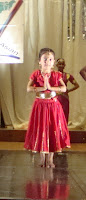
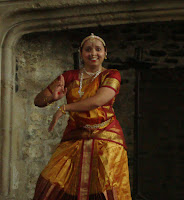
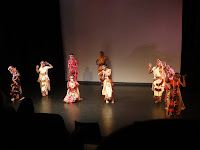
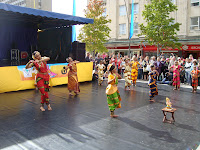
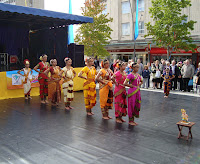
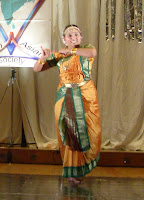
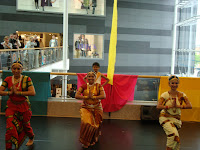
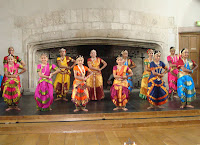
The World at Your Feet is a celebration of the richness and variety of  [U.K] Plymouth's history and its role in relation to migration to other parts of the world.
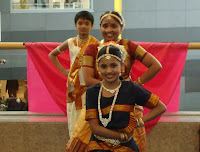
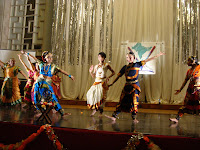
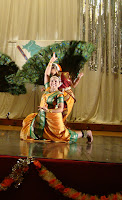
"An interview with Vinitha Rajkumar the owner and founder of Rhythm Indian school of dance, Giving us information about her migration story and the part she plays in The World At Your Feet project here in Plymouth"..
Wg.Cdr JP adds :Vinitha Rajkumar, a Badaga, is married to Dr.Rajkumar Krishnan (Naihatty), daughter of (late) Mrs.Menaka (Hubbathalai) and Dr.K.M.Raju (Kerkandi,Kekkatti) and grand daughter of Mrs.Idyammal Bellie Gowder, sister of Dr.Vivek Raju (South Africa) and Vinod Raju (Coonoor) and also my niece


We are proud of you Vinitha!